

Boron nitride (BN) is a remarkable material with a wide range of applications, from high - performance ceramics to electronics. As a dedicated supplier of Boron Nitride Targets, I often encounter questions about its various properties, and one that frequently comes up is the refractive index of boron nitride target. In this blog, we'll delve into what the refractive index is, how it applies to boron nitride targets, and its significance in different industries.
Understanding the Refractive Index
The refractive index (n) of a material is a measure of how much the speed of light is reduced when it passes through that material compared to its speed in a vacuum. Mathematically, it is defined as (n = \frac{c}{v}), where (c) is the speed of light in a vacuum ((c\approx 299792458\ m/s)) and (v) is the speed of light in the material. When light travels from one medium to another with a different refractive index, it bends or refracts. This phenomenon is the basis for many optical devices such as lenses, prisms, and fiber - optic cables.
The refractive index of a material depends on several factors, including its chemical composition, crystal structure, and the wavelength of the incident light. Different forms of the same material can have different refractive indices. For example, diamond and graphite are both forms of carbon, but they have very different refractive indices due to their distinct crystal structures.
Boron Nitride: A Brief Overview
Boron nitride exists in several polymorphic forms, the most common being hexagonal boron nitride (h - BN), cubic boron nitride (c - BN), and wurtzite boron nitride (w - BN). Each form has unique physical and chemical properties, which make them suitable for different applications.
Hexagonal boron nitride is often referred to as "white graphite" because of its layered structure similar to graphite. It has excellent thermal conductivity, chemical stability, and lubricating properties. Cubic boron nitride, on the other hand, is extremely hard, second only to diamond, and is widely used in cutting tools and abrasives. Wurtzite boron nitride is a relatively new and less - studied form, but it shows promise for high - pressure and high - temperature applications.
Refractive Index of Boron Nitride Targets
The refractive index of boron nitride targets varies depending on the specific form of boron nitride. Hexagonal boron nitride typically has a refractive index in the range of about 1.7 - 2.2 for visible light. This value can change slightly depending on factors such as the purity of the material, the presence of impurities, and the manufacturing process.

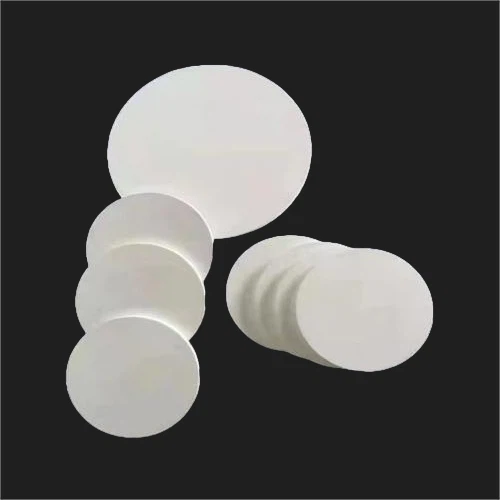
Cubic boron nitride has a higher refractive index, usually around 2.1 - 2.4 for visible light. The higher refractive index of c - BN compared to h - BN is due to its more compact and symmetric crystal structure, which causes light to interact more strongly with the material and slow down more significantly.
The refractive index of wurtzite boron nitride is not as well - documented as that of h - BN and c - BN, but it is expected to be in a similar range to c - BN, given its similar hardness and density.
Significance of the Refractive Index in Applications
Optical Applications
In optical applications, the refractive index of boron nitride targets is crucial. For example, in thin - film coatings, boron nitride thin films can be deposited using physical vapor deposition (PVD) or chemical vapor deposition (CVD) techniques. These thin films can be used as anti - reflection coatings, where the refractive index of the boron nitride layer is carefully chosen to match the substrate and the surrounding medium to minimize reflection and maximize transmission of light.
Boron nitride can also be used in the fabrication of optical lenses and prisms. Its high refractive index and excellent thermal and chemical stability make it a suitable candidate for high - performance optical components that can operate in harsh environments.
Semiconductor Applications
In the semiconductor industry, boron nitride is used as a Semiconductor Boron Source. The refractive index of boron nitride targets can affect the performance of semiconductor devices. For example, in the deposition of thin films on semiconductor wafers, the refractive index of the boron nitride layer can influence the optical properties of the device, such as the reflectivity and the absorption of light. This, in turn, can affect the efficiency and performance of optoelectronic devices such as light - emitting diodes (LEDs) and photodetectors.
Thermal Management
In thermal management applications, the refractive index can also play a role. Boron nitride has high thermal conductivity, and its optical properties can be used in combination with its thermal properties. For example, in some cases, the refractive index can be used to control the absorption and emission of infrared radiation, which is important for heat transfer in electronic devices.
Our Boron Nitride Target Products
As a leading supplier of boron nitride targets, we offer high - quality products with consistent refractive index values. Our manufacturing process ensures that the boron nitride targets have the desired crystal structure and purity, which are essential for achieving the expected refractive index.
We provide both hexagonal and cubic boron nitride targets in various sizes and shapes to meet the diverse needs of our customers. Our Boron Nitride Powder can also be used as a raw material for the production of boron nitride targets, and it has excellent quality and purity.
In addition, we offer Boron Nitride Insulation Tube products, which are made from high - quality boron nitride and have excellent insulation properties. These tubes can be used in a variety of applications, including electronics and high - temperature environments.
Contact Us for Procurement
If you are interested in our boron nitride target products or have any questions about the refractive index of boron nitride targets, we encourage you to contact us for procurement and further discussion. Our team of experts is ready to provide you with detailed information and technical support to help you choose the right products for your specific applications.
References
- "Introduction to Solid State Physics" by Charles Kittel
- "Handbook of Optical Constants of Solids" edited by Edward D. Palik
- Research papers on boron nitride published in journals such as "Journal of Materials Science" and "Applied Physics Letters"