

What is the magnetic susceptibility of boron nitride insulators? Well, I'm here to break it down for you in plain English. As a supplier of Boron Nitride Insulators, I've seen firsthand how these materials are revolutionizing various industries, and understanding their magnetic susceptibility is key to fully leveraging their potential.
Let's start with the basics. Magnetic susceptibility is a measure of how much a material will become magnetized in an applied magnetic field. It's a crucial property for materials used in a wide range of applications, from electronics to aerospace. When we talk about boron nitride insulators, we're dealing with a unique class of materials that offer a combination of excellent insulation properties and interesting magnetic behavior.
Boron nitride comes in different forms, such as hexagonal (h-BN) and cubic (c-BN). Each form has its own set of physical and chemical properties, which in turn affect its magnetic susceptibility. Hexagonal boron nitride, for example, is known for its high thermal conductivity, electrical insulation, and chemical stability. In terms of magnetism, it generally exhibits diamagnetic behavior. diamagnetic materials have a negative magnetic susceptibility, meaning they are weakly repelled by a magnetic field. This trait makes h-BN suitable for applications where magnetic interference needs to be minimized, such as in sensitive electronic devices.
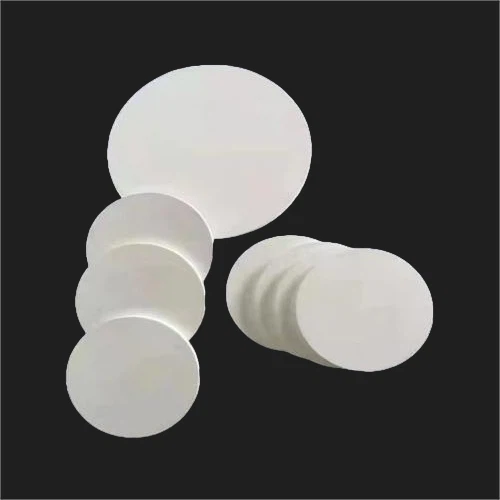

On the other hand, cubic boron nitride is extremely hard and has high thermal stability. While it also has insulating properties, its magnetic susceptibility may vary depending on factors like impurities and crystal defects. In some cases, c-BN can show very low magnetic susceptibility values, similar to h-BN, but the presence of certain dopants or defects could potentially alter its magnetic response.
Now, you might be wondering why all this matters. Well, in industries like semiconductor manufacturing, the magnetic properties of materials can have a significant impact on device performance. For instance, if you're looking for a Semiconductor Boron Source, the magnetic susceptibility of the boron-containing material can affect the uniformity of doping and the overall quality of the semiconductor device. Boron nitride insulators with predictable and low magnetic susceptibility can help ensure consistent and reliable performance in these high-tech applications.
Another area where boron nitride insulators shine is in the development of Boron Nitride Composite Ceramics. These composites combine the unique properties of boron nitride with other ceramic materials to create new materials with enhanced performance. The magnetic susceptibility of the boron nitride component plays a role in determining the overall magnetic behavior of the composite. This can be important for applications in magnetic shielding, where the ability to control and manipulate magnetic fields is crucial.
As a supplier of Boron Nitride Insulators, I've had the opportunity to work with customers from various industries. One common concern is finding the right material with the appropriate magnetic properties for their specific application. That's where our expertise comes in. We can provide detailed information about the magnetic susceptibility of our boron nitride insulators and help you choose the best product for your needs.
So, if you're in the market for high-quality boron nitride insulators, whether you're working on semiconductor projects or exploring the development of new composite materials, don't hesitate to get in touch. We're here to answer your questions, provide technical support, and ensure you have the best possible materials for your applications. Let's start a conversation and see how we can help you achieve your goals.
Contact us today to discuss your requirements and start the procurement process. We're looking forward to working with you!
References
- Handbook of Advanced Electronic and Photonic Materials and Devices, edited by H.S. Nalwa, 2001.
- Properties of Advanced Ceramics, by R.J. Brook, 2007.
- Journal of Materials Science, various issues on boron nitride research.