

Semiconductor boron sources play a pivotal role in modern technology, with their applications spanning across multiple industries. As a leading semiconductor boron source supplier, I am excited to delve into the diverse application fields of these essential materials.
1. Semiconductor Manufacturing
The semiconductor industry is the most well - known and significant application area for semiconductor boron sources. In the production of integrated circuits (ICs), boron is used as a p - type dopant. When added to silicon, boron atoms have one less valence electron than silicon atoms. This creates "holes" in the silicon lattice, which can conduct electricity. By precisely controlling the amount and distribution of boron doping, semiconductor manufacturers can create p - type regions within the silicon wafer, which are crucial for the operation of various semiconductor devices such as diodes, transistors, and integrated circuits.
For example, in metal - oxide - semiconductor field - effect transistors (MOSFETs), boron doping is used to form the source and drain regions of p - channel MOSFETs. The ability to accurately control the boron concentration and profile is essential for achieving the desired electrical characteristics of the transistors, such as threshold voltage, mobility, and leakage current. This, in turn, affects the performance, power consumption, and reliability of the entire integrated circuit.
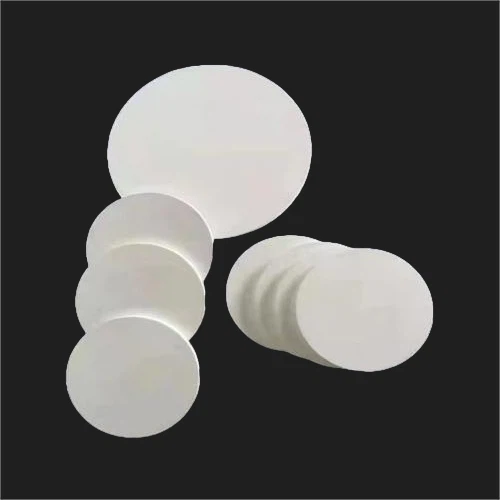
Our Semiconductor Boron Source products are designed to meet the strict purity and uniformity requirements of the semiconductor manufacturing industry. We ensure that the boron sources are free from impurities that could potentially degrade the performance of the semiconductor devices.

2. Solar Energy
The solar energy industry also heavily relies on semiconductor boron sources. In photovoltaic (PV) cells, which convert sunlight into electricity, boron is used as a dopant in the silicon wafers. Similar to its role in semiconductor manufacturing, boron creates p - type regions in the silicon. In a typical crystalline silicon PV cell, a p - n junction is formed by doping one side of the silicon wafer with boron (p - type) and the other side with phosphorus (n - type).
When sunlight hits the PV cell, it generates electron - hole pairs. The p - n junction separates these pairs, allowing the electrons to flow through an external circuit and produce electricity. By optimizing the boron doping concentration and distribution, the efficiency of the PV cell can be significantly improved. Higher efficiency means more electricity can be generated from the same amount of sunlight, making solar energy a more cost - effective and sustainable energy source.
Our high - quality semiconductor boron sources can contribute to the production of more efficient and reliable solar cells. We understand the importance of consistent quality in the solar energy industry, as any variation in the boron doping can lead to reduced cell efficiency and performance.
3. Optoelectronics
Optoelectronic devices, which combine optics and electronics, also benefit from semiconductor boron sources. In light - emitting diodes (LEDs) and laser diodes, boron can be used in the semiconductor materials to control the electrical and optical properties. For instance, in some compound semiconductor - based LEDs, boron doping can affect the bandgap and carrier concentration, which in turn influence the emission wavelength and efficiency of the LED.
In addition, in photodetectors, which convert light into an electrical signal, boron - doped semiconductor layers can be used to enhance the sensitivity and response speed of the device. By carefully engineering the boron - doped regions, optoelectronic device manufacturers can achieve better performance in terms of light emission, detection, and modulation.
Our company offers semiconductor boron sources that are suitable for a wide range of optoelectronic applications. We work closely with our customers in the optoelectronics industry to develop customized solutions that meet their specific requirements.
4. Special - Shaped Ceramic Parts
Boron nitride, which can be considered a form of a semiconductor - related boron - containing material, is widely used in the production of Boron Nitride Special - shaped Ceramic Parts. These parts have unique properties such as high thermal conductivity, excellent electrical insulation, and chemical stability.
In high - temperature applications, such as in furnaces and heat exchangers, boron nitride special - shaped ceramic parts can be used as insulation materials or structural components. Their ability to withstand high temperatures without significant degradation makes them ideal for these harsh environments.
In the electronics industry, these ceramic parts can be used as substrates for semiconductor devices. The high thermal conductivity of boron nitride helps to dissipate heat from the semiconductor devices, improving their reliability and performance. The electrical insulation properties also prevent electrical interference between different components.
5. Insulation Tubes
Boron Nitride Insulation Tube is another important application of boron - related materials. These tubes are used in various electrical and electronic systems where electrical insulation and thermal management are crucial.
In high - voltage electrical equipment, boron nitride insulation tubes can be used to isolate conductors and prevent electrical breakdown. Their high dielectric strength and excellent insulation properties make them suitable for these applications. At the same time, the high thermal conductivity of boron nitride allows the tubes to efficiently transfer heat away from the conductors, reducing the risk of overheating.
In semiconductor manufacturing equipment, insulation tubes are used to protect sensitive electronic components from electrical interference and heat. Our boron nitride insulation tubes are manufactured with high precision to ensure a perfect fit and reliable performance in these demanding applications.
As a supplier of semiconductor boron sources, we are committed to providing high - quality products and excellent customer service. Our team of experts has extensive knowledge and experience in the field of boron - related materials, and we are constantly striving to improve our products and processes.
If you are interested in our semiconductor boron source products or have any specific requirements for your applications, we encourage you to contact us for a detailed discussion. We are more than happy to work with you to find the best solutions for your needs. Whether you are in the semiconductor manufacturing, solar energy, optoelectronics, or other related industries, we believe our products can meet your expectations and contribute to the success of your projects.
References
- Sze, S. M. (1981). Physics of Semiconductor Devices. John Wiley & Sons.
- Green, M. A. (2003). Third Generation Photovoltaics: Advanced Solar Energy Conversion. Springer.
- Zangwill, A. (1988). Physics at Surfaces. Cambridge University Press.