

Boron carbide, known for its exceptional hardness, high melting point, and excellent chemical stability, is a remarkable material with a wide range of applications. As a boron carbide supplier, I have witnessed firsthand the significance of porosity in influencing its properties and, consequently, its performance in various industries. In this blog, we will delve into how the porosity of boron carbide affects its properties and explore the implications for different applications.
Understanding Porosity in Boron Carbide
Porosity refers to the presence of voids or pores within a material. In boron carbide, porosity can arise during the manufacturing process, which typically involves sintering or hot pressing of boron carbide powders. Factors such as powder characteristics, sintering temperature, pressure, and the presence of additives can all influence the final porosity of the boron carbide product.
Porosity is usually expressed as a percentage of the total volume of the material that is occupied by pores. It can have a profound impact on the physical, mechanical, and chemical properties of boron carbide, which in turn affect its suitability for different applications.
Impact on Mechanical Properties
Hardness and Wear Resistance
One of the most well - known properties of boron carbide is its high hardness, second only to diamond and cubic boron nitride. However, porosity can significantly reduce the hardness of boron carbide. Pores act as stress concentrators, which means that when a load is applied, the stress is concentrated around the pores rather than being evenly distributed throughout the material. This can lead to premature failure and a decrease in the overall hardness and wear resistance of the boron carbide.
For applications where wear resistance is crucial, such as Boron Carbide Ceramic Disc used in grinding and cutting tools, low porosity is essential. A lower porosity ensures that the material can withstand high - stress conditions without significant wear or damage, resulting in longer tool life and better performance.
Strength and Fracture Toughness
The strength of boron carbide is also affected by porosity. Similar to hardness, pores weaken the material by providing sites for crack initiation and propagation. As the porosity increases, the probability of cracks forming and spreading through the material also increases, leading to a decrease in the flexural strength and fracture toughness of boron carbide.
In applications where the material is subjected to high mechanical stresses, such as in armor plates, a low - porosity boron carbide is preferred. A stronger and more fracture - tough material can better withstand impacts and prevent penetration, providing enhanced protection.
Influence on Thermal Properties
Thermal Conductivity
Porosity has a negative impact on the thermal conductivity of boron carbide. Heat transfer in solids occurs mainly through the lattice vibrations of atoms. Pores disrupt the lattice structure, creating barriers to the flow of heat. As a result, materials with higher porosity have lower thermal conductivity.
In applications where efficient heat transfer is required, such as in heat sinks or high - temperature components, a low - porosity boron carbide is advantageous. A higher thermal conductivity allows for better dissipation of heat, preventing overheating and ensuring the proper functioning of the device.
Thermal Expansion
The presence of pores can also affect the thermal expansion behavior of boron carbide. Pores can act as "cushions" that accommodate the expansion and contraction of the material during temperature changes. However, excessive porosity can lead to non - uniform thermal expansion, which can cause internal stresses and cracking in the material.
For applications where dimensional stability is critical, such as in precision components, controlling the porosity of boron carbide is necessary to ensure consistent thermal expansion and prevent damage due to temperature fluctuations.
Effects on Chemical Properties
Chemical Reactivity
Porosity can increase the chemical reactivity of boron carbide. Pores provide a larger surface area for chemical reactions to occur, exposing more of the material to the surrounding environment. This can make the material more susceptible to corrosion and chemical attack.
In corrosive environments, such as in chemical processing plants or in the presence of aggressive chemicals, a low - porosity boron carbide is more desirable. A lower surface area reduces the contact between the material and the corrosive agents, minimizing the risk of chemical degradation.
Neutron Absorption
Boron carbide is widely used as a neutron absorber in nuclear reactors, thanks to its high boron content. Porosity can affect the neutron absorption efficiency of boron carbide. Pores can act as channels for neutrons to pass through without being absorbed, reducing the overall effectiveness of the material as a neutron absorber.

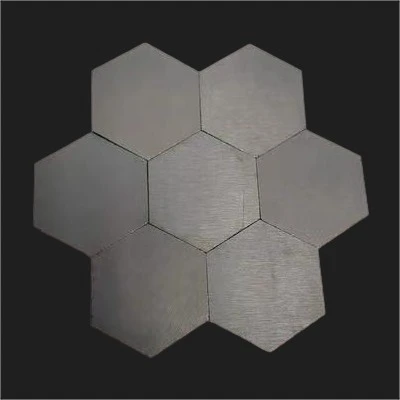
For Boron Carbide Control Rods in nuclear reactors, a low - porosity boron carbide is essential to ensure reliable and efficient neutron absorption, which is crucial for controlling the nuclear reaction and maintaining the safety of the reactor.
Applications and Porosity Requirements
Abrasive and Cutting Tools
As mentioned earlier, for abrasive and cutting tools, low porosity is essential to ensure high hardness and wear resistance. These tools are subjected to high - stress conditions during operation, and a low - porosity boron carbide can withstand the wear and tear, providing a longer service life.
Armor and Protection
In armor applications, such as body armor and vehicle armor, low porosity is required to achieve high strength and fracture toughness. A low - porosity boron carbide can better absorb and dissipate the energy of an impact, protecting the wearer or the vehicle from penetration.
Nuclear Industry
In the nuclear industry, Boron Carbide Control Rods demand low porosity to ensure efficient neutron absorption. The ability of boron carbide to absorb neutrons is crucial for controlling the nuclear reaction, and any reduction in absorption efficiency due to porosity can have serious consequences for the safety and operation of the reactor.
High - Temperature Applications
For high - temperature applications, low porosity is necessary to maintain good thermal conductivity and dimensional stability. In heat sinks or high - temperature components, a low - porosity boron carbide can effectively transfer heat and resist thermal stresses, ensuring the proper functioning of the device.
Controlling Porosity in Boron Carbide Production
As a boron carbide supplier, we understand the importance of controlling porosity in the production process. To achieve low - porosity boron carbide products, we carefully select high - quality raw materials with appropriate particle size distributions. The sintering process is also optimized, including precise control of temperature, pressure, and sintering time.
Additives can also be used to promote densification and reduce porosity. For example, small amounts of certain metals or compounds can act as sintering aids, enhancing the bonding between boron carbide particles and reducing the formation of pores.
Conclusion
In conclusion, the porosity of boron carbide has a profound impact on its mechanical, thermal, and chemical properties. Depending on the application, different porosity levels are required to optimize the performance of the material. As a boron carbide supplier, we are committed to providing high - quality products with controlled porosity to meet the diverse needs of our customers.
If you are interested in our boron carbide products, including Boron Carbide Ceramic Disc, Boron Carbide Control Rods, and Hexagonal Boron Carbide, and would like to discuss your specific requirements, please feel free to contact us for procurement and negotiation. We look forward to working with you to find the best boron carbide solutions for your applications.
References
- Riedel, R., & Wirth, R. (2011). Boron Carbide. In Springer Handbook of Materials Science and Technology (pp. 1 - 22). Springer, Berlin, Heidelberg.
- Munir, Z. A., & Anselmi - Tamburini, U. (2009). The role of sintering aids in the densification of boron carbide. Journal of the American Ceramic Society, 92(10), 2157 - 2164.
- Singh, R., & Upadhyaya, G. D. (2013). Boron carbide: Structure, properties, and stability under high pressure. Journal of Applied Physics, 113(17), 171101.