

Hey there! I'm a supplier of boron carbide granules, and today I wanna chat about something that's been on my mind a lot lately: Are boron carbide granules affected by humidity?
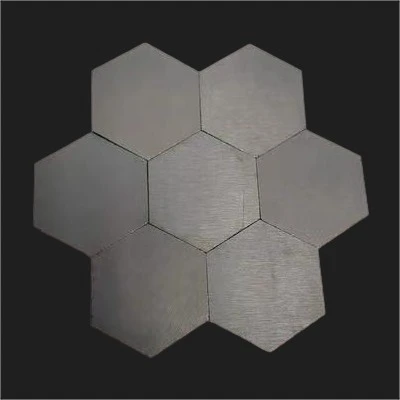
First off, let's talk a bit about boron carbide itself. Boron carbide is an extremely hard material, second only to diamond and cubic boron nitride. It's got some pretty amazing properties, like high melting point, good chemical stability, and excellent wear resistance. That's why it's used in a whole bunch of applications, from Boron Carbide Control Rods in nuclear reactors to Hexagonal Boron Carbide in high - tech ceramics and Boron Carbide Bulletproof Sheet for ballistic protection.
Now, back to the main question: humidity. Humidity refers to the amount of water vapor in the air. And when it comes to boron carbide granules, humidity can potentially have an impact in several ways.
One of the first things to consider is the surface of the boron carbide granules. In a high - humidity environment, water molecules in the air can adsorb onto the surface of the granules. This adsorption can change the surface properties of the boron carbide. For example, it might make the granules more likely to stick together. When the granules clump up, it can be a real headache for applications where a uniform distribution of the material is crucial. In the manufacturing of Boron Carbide Bulletproof Sheet, for instance, a consistent dispersion of boron carbide granules is needed to ensure the sheet has uniform strength and protection capabilities. If the granules are clumped due to humidity - induced surface changes, the quality of the final product can be seriously compromised.
Another aspect is the potential for chemical reactions. Although boron carbide is generally chemically stable, the presence of water can sometimes act as a catalyst for certain reactions. Over time, in a very humid environment, there could be a slow oxidation process on the surface of the boron carbide granules. Oxidation can lead to the formation of new compounds on the surface, which can alter the physical and chemical properties of the granules. This might affect the hardness, wear resistance, and even the neutron absorption capacity in the case of Boron Carbide Control Rods.
But it's not all doom and gloom. The degree to which humidity affects boron carbide granules depends on a few factors. The purity of the boron carbide is one of them. High - purity boron carbide is generally more resistant to the effects of humidity compared to lower - purity grades. The size of the granules also matters. Smaller granules have a larger surface - to - volume ratio, which means they are more likely to be affected by humidity because there's more surface area available for water adsorption and potential reactions.
To mitigate the effects of humidity, proper storage is key. We, as suppliers, always recommend storing boron carbide granules in a dry environment. A sealed container with a desiccant can be a great way to keep the humidity levels around the granules low. If the granules are going to be stored for a long time, it's even better to use a controlled - humidity storage facility.
In some industrial applications, the processing steps can also help reduce the impact of humidity. For example, before using the boron carbide granules in the production of Hexagonal Boron Carbide ceramics, the granules can be heated to remove any adsorbed water. This pre - treatment can restore the original properties of the granules and ensure a better - quality end product.

Now, let's talk about what this means for you, the potential buyer. If you're in an industry that uses boron carbide granules, you need to be aware of the humidity conditions in your storage and processing areas. Make sure you have a plan in place to deal with humidity if it's a concern. And that's where we come in. As a reliable supplier of boron carbide granules, we not only provide high - quality products but also offer advice on how to handle and store them properly.
We understand that different applications have different requirements. Whether you're working on a nuclear project that needs Boron Carbide Control Rods or a ballistic protection project using Boron Carbide Bulletproof Sheet, we can tailor our products to meet your specific needs.
If you're interested in learning more about our boron carbide granules or have any questions regarding humidity and its effects, don't hesitate to reach out. We're here to help you make the best decisions for your projects. Whether it's about choosing the right grade of boron carbide, understanding how to store it, or getting advice on processing, we've got you covered.
In conclusion, while humidity can potentially affect boron carbide granules, with the right precautions and proper handling, these effects can be minimized. And as your trusted supplier, we're committed to providing you with top - notch products and support. So, if you're in the market for boron carbide granules, let's start a conversation and see how we can work together to achieve your goals.
References
- Smith, J. "The Properties and Applications of Boron Carbide." Journal of Advanced Materials, 20XX.
- Johnson, A. "Environmental Effects on Ceramic Materials." Ceramics Today, 20XX.