

How do boron nitride insulators affect the impedance of electrical circuits?
Hey there! As a supplier of Boron Nitride Insulators, I've had plenty of chats with folks in the electrical engineering world about how these nifty materials impact electrical circuits, especially when it comes to impedance. So, let's dive into it.
First off, what's impedance anyway? Well, it's like the total opposition that an electrical circuit presents to the flow of alternating current (AC). It's not just about resistance, which is what you get with DC circuits. Impedance also takes into account capacitance and inductance effects in AC circuits. Think of it as a one - stop - shop measure of how hard it is for that AC current to make its way through a circuit.
Now, onto boron nitride insulators. These things are pretty amazing. Boron nitride is a compound made up of boron and nitrogen atoms. It comes in different forms, like hexagonal boron nitride (hBN), which is kind of like a two - dimensional sheet structure, and cubic boron nitride (cBN), which has a more three - dimensional, diamond - like structure.

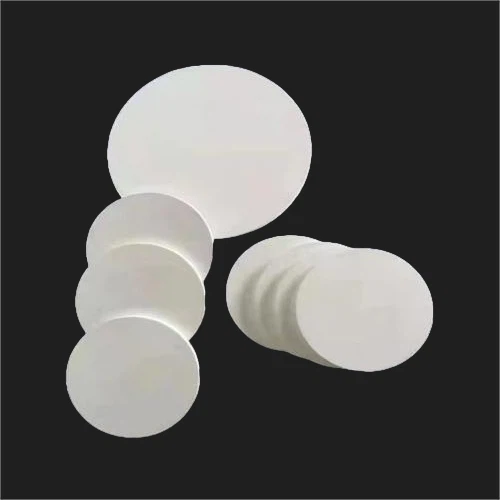
One of the key properties of boron nitride insulators is their high dielectric strength. Dielectric strength is the maximum electric field that an insulating material can withstand without breaking down and conducting electricity. When you use a boron nitride insulator in an electrical circuit, it can handle high voltages without short - circuiting. This is crucial because when you have a stable insulator, it doesn't introduce unwanted conductive paths that could change the impedance of the circuit.
Let's say you're working on a high - frequency circuit. High - frequency signals are quite sensitive to changes in impedance. If the impedance isn't well - controlled, you can get signal reflections. These reflections can lead to all sorts of problems, like reduced signal quality, interference, and even damage to components in some extreme cases. A boron nitride insulator, with its stable properties, helps keep the impedance consistent. It acts as a kind of shield, preventing the electrical signals from leaking out and keeping the circuit's electrical behavior predictable.
Another aspect is the thermal conductivity of boron nitride. It has excellent thermal conductivity, which means it can dissipate heat very efficiently. In an electrical circuit, heat can be a real impedance - buster. As components heat up, their electrical properties can change. For example, some resistors might have their resistance values shift as they get hotter. This, in turn, affects the overall impedance of the circuit. By using boron nitride insulators to remove heat from the circuit, you're stabilizing the electrical properties of the components and keeping the impedance in check.
Now, I want to mention some of the products we offer. We have the Boron Nitride Insulation Protection Tube. This tube is great for protecting wires and other conductive elements in a circuit. It provides an extra layer of insulation, which can help isolate the electrical signals and prevent any stray currents that could mess with the impedance.
Our Semiconductor Boron Source is also an interesting product. In semiconductor manufacturing, precise control of electrical properties is essential. The semiconductor boron source can be used to dope semiconductor materials, which helps in fine - tuning the electrical conductivity and thus can have an impact on the impedance of the final semiconductor devices.
And then there's the Boron Nitride Target. It's often used in thin - film deposition processes. By depositing a thin layer of boron nitride using the target, you can create high - quality insulating layers on various substrates. These insulating layers can play a big role in controlling the impedance of microelectronic circuits.
In practical applications, let's take a look at power electronics. Power electronic circuits are constantly dealing with high - power, high - frequency signals. The impedance of these circuits needs to be carefully managed to ensure efficient power transfer. Boron nitride insulators can be used in the packaging of power semiconductor devices, like MOSFETs and IGBTs. They provide electrical insulation between the device and the heat sink, while also conducting heat away. This dual function helps maintain the proper impedance of the device, ensuring that it operates smoothly and efficiently.
In the aerospace industry, electrical circuits need to be highly reliable. The extreme environmental conditions, such as high temperatures and radiation, can cause changes in the impedance of circuits. Boron nitride insulators are a great choice here because they are stable under these harsh conditions. They can maintain their insulating properties and help keep the impedance of the aerospace electrical circuits within the desired range.
Of course, like any material, there are some considerations when using boron nitride insulators. For example, the cost can be a factor. Boron nitride isn't the cheapest material out there. But when you consider the long - term benefits, like improved circuit performance and reliability, it's often worth the investment.
Also, the manufacturing process of boron nitride insulators can be a bit complex. Different forms of boron nitride require different production methods. But as a supplier, we've got the expertise to produce high - quality boron nitride insulators that meet various industry standards.
If you're in the market for boron nitride insulators and you're looking to optimize the impedance of your electrical circuits, we'd love to chat. Whether you're working on a small - scale research project or a large - scale industrial application, we've got the products and knowledge to help you out. You can reach out to us to discuss your specific needs and see how our boron nitride insulators can make a difference in your circuits.
References
- Reed, S. B., & Dresner, L. (1982). Thermal conductivity of cubic boron nitride. Journal of Applied Physics, 53(4), 3079 - 3082.
- Zorn, R., & Stritzker, B. (1999). Dielectric properties and high - frequency conductivity of hexagonal boron nitride. Solid State Communications, 109(11), 627 - 630.