

As a supplier of Boron Nitride Targets, I often encounter inquiries about the dielectric constant of boron nitride target. In this blog, I'll delve into what the dielectric constant of boron nitride target is, its significance, and how it relates to various applications.
Understanding the Dielectric Constant
The dielectric constant, also known as relative permittivity (εᵣ), is a measure of a material's ability to store electrical energy in an electric field. It is defined as the ratio of the permittivity of a substance (ε) to the permittivity of free space (ε₀). Mathematically, εᵣ = ε / ε₀. The dielectric constant is a dimensionless quantity that reflects how much a material can polarize in response to an applied electric field compared to a vacuum.
For boron nitride (BN), a compound composed of boron and nitrogen atoms, its dielectric constant varies depending on several factors such as crystal structure, temperature, and frequency of the applied electric field.
Crystal Structures of Boron Nitride and Their Dielectric Constants
Boron nitride exists in several crystal structures, with the two most common being hexagonal boron nitride (h - BN) and cubic boron nitride (c - BN).

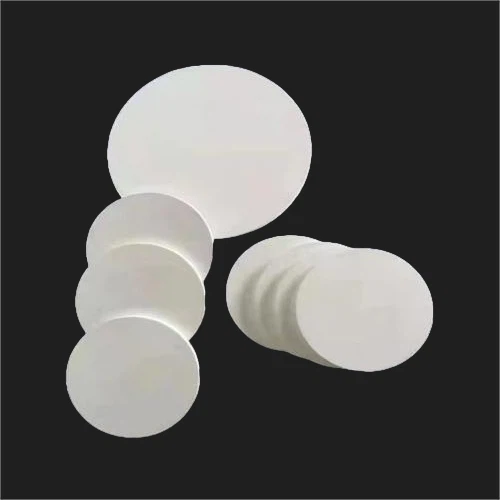
Hexagonal Boron Nitride (h - BN)
Hexagonal boron nitride has a layered structure similar to graphite. In h - BN, the boron and nitrogen atoms are arranged in hexagonal rings within each layer, and the layers are held together by weak van der Waals forces.
The dielectric constant of h - BN is relatively low, typically in the range of 3 - 4 at room temperature and low frequencies. This low dielectric constant makes h - BN an excellent electrical insulator. The low value is due to the strong covalent bonds within the layers and the weak inter - layer interactions. The electrons are tightly bound within the covalent bonds, and there is limited polarization in response to an applied electric field.
h - BN's low dielectric constant is highly desirable in many applications. For example, in high - frequency electronic devices, materials with low dielectric constants are preferred because they reduce signal loss and crosstalk. h - BN can be used as a dielectric layer in integrated circuits to improve the performance of electronic components. You can learn more about related boron nitride products like Boron Nitride Ceramic Belt Nozzle, which also benefit from the unique properties of boron nitride.
Cubic Boron Nitride (c - BN)
Cubic boron nitride has a diamond - like crystal structure. It is a hard and dense material with strong covalent bonds in all three dimensions.
The dielectric constant of c - BN is higher than that of h - BN, typically around 7 - 8 at room temperature and low frequencies. The higher dielectric constant in c - BN is due to its more three - dimensional and symmetric crystal structure, which allows for greater polarization in an electric field compared to h - BN.
Cubic boron nitride is often used in applications where high hardness and good electrical properties are required. For instance, it can be used as a dielectric material in high - power electronic devices. It can also be used in the Boron Nitride Crucibles for high - temperature applications, where its dielectric properties can play a role in maintaining stable electrical conditions within the crucible.
Influence of Temperature and Frequency on the Dielectric Constant
Temperature
The dielectric constant of boron nitride is temperature - dependent. As the temperature increases, the dielectric constant of both h - BN and c - BN generally shows some changes.
In h - BN, at low temperatures, the dielectric constant is relatively stable. However, as the temperature rises, the thermal motion of the atoms increases, which can lead to a slight increase in the dielectric constant. This is because the increased thermal energy allows for more movement of the atoms and a greater ability to polarize in an electric field.
For c - BN, the temperature effect on the dielectric constant is also significant. At high temperatures, the dielectric constant may change due to thermal expansion and changes in the atomic bonding. Understanding the temperature - dependence of the dielectric constant is crucial in applications where boron nitride targets are used in high - temperature environments, such as in semiconductor manufacturing processes.
Frequency
The dielectric constant of boron nitride also varies with the frequency of the applied electric field. At low frequencies, the dielectric constant is relatively constant. However, as the frequency increases, the dielectric constant may decrease.
This is because at high frequencies, the atoms and molecules do not have enough time to respond to the rapidly changing electric field. As a result, the polarization of the material decreases, leading to a lower dielectric constant. In applications involving high - frequency electrical signals, such as in radio - frequency (RF) devices, the frequency - dependence of the dielectric constant must be carefully considered.
Applications Related to the Dielectric Constant of Boron Nitride Targets
Semiconductor Industry
In the semiconductor industry, boron nitride targets are widely used. The low dielectric constant of h - BN makes it an ideal material for use as a dielectric layer in semiconductor devices. It can help reduce parasitic capacitance, which is crucial for improving the speed and performance of integrated circuits.
Moreover, boron nitride can also be used as a Semiconductor Boron Source. The dielectric properties of boron nitride play a role in ensuring the stability of the electrical environment during the semiconductor manufacturing process.
Optoelectronic Devices
In optoelectronic devices, such as light - emitting diodes (LEDs) and photodetectors, the dielectric constant of boron nitride is important. A low dielectric constant can reduce the absorption of light and improve the efficiency of light emission or detection. Boron nitride can be used as a passivation layer or a dielectric spacer in these devices to enhance their performance.
High - Voltage Insulation
Due to its excellent electrical insulation properties, boron nitride targets are used in high - voltage insulation applications. The dielectric constant of boron nitride helps in maintaining a stable electrical field and preventing electrical breakdown. This is crucial in power transmission and distribution systems, where reliable insulation is essential for safe and efficient operation.
Why Choose Our Boron Nitride Targets
As a supplier of boron nitride targets, we offer high - quality products with well - characterized dielectric properties. Our manufacturing process ensures that the crystal structure of the boron nitride is precisely controlled, resulting in consistent dielectric constants within the desired range.
We understand the importance of the dielectric constant in various applications, and we can provide customized boron nitride targets based on your specific requirements. Whether you need h - BN or c - BN targets, we can offer products with the appropriate dielectric constant for your project.
If you are interested in purchasing boron nitride targets or have any questions about their dielectric properties, please feel free to contact us for a procurement discussion. We are committed to providing you with the best products and services to meet your needs.
References
- Zhang, X., & Chen, Y. (2018). Dielectric properties of boron nitride nanomaterials. Journal of Materials Science, 53(1), 1 - 15.
- Wang, L., & Li, H. (2019). Temperature - dependent dielectric behavior of cubic boron nitride. Applied Physics Letters, 114(12), 122901.
- Chen, S., & Liu, W. (2020). Frequency - dependent dielectric constant of hexagonal boron nitride in high - frequency applications. IEEE Transactions on Dielectrics and Electrical Insulation, 27(3), 1054 - 1060.