

As a supplier of Boron Carbide Neutron Shielding, I've witnessed firsthand the critical role that the manufacturing process plays in determining the neutron shielding properties of boron carbide. In this blog, I'll delve into the intricate relationship between the manufacturing process and the neutron shielding capabilities of boron carbide, exploring how various manufacturing steps can significantly impact its performance.

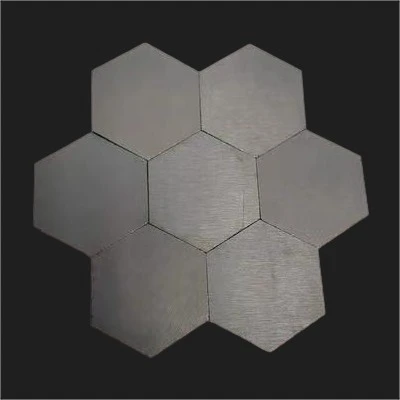
Understanding Boron Carbide Neutron Shielding
Boron carbide is a remarkable material known for its high hardness, excellent chemical stability, and exceptional neutron absorption properties. These characteristics make it an ideal choice for neutron shielding applications in various industries, including nuclear power, research facilities, and medical imaging. When neutrons interact with boron carbide, the boron atoms in the material absorb the neutrons through a nuclear reaction, effectively reducing the neutron flux and protecting the surrounding environment from radiation.
The Impact of Manufacturing Process on Neutron Shielding Properties
The manufacturing process of boron carbide can have a profound impact on its neutron shielding properties. Here are some key factors to consider:
Raw Material Quality
The quality of the raw materials used in the manufacturing process is crucial for achieving optimal neutron shielding performance. High-purity boron carbide powders with a consistent particle size distribution are preferred, as they ensure uniform density and minimize the presence of impurities that could interfere with neutron absorption. Additionally, the isotopic composition of boron is an important consideration, as the boron-10 isotope is primarily responsible for neutron absorption. Therefore, using high-purity boron carbide powders with a high boron-10 content can enhance the neutron shielding efficiency of the final product.
Powder Synthesis
The powder synthesis method used to produce boron carbide can significantly affect its crystal structure and morphology, which in turn influence its neutron shielding properties. There are several methods available for synthesizing boron carbide powders, including carbothermal reduction, self-propagating high-temperature synthesis (SHS), and chemical vapor deposition (CVD). Each method has its own advantages and disadvantages, and the choice of method depends on factors such as the desired particle size, purity, and crystal structure.
For example, carbothermal reduction is a commonly used method for synthesizing boron carbide powders. This method involves heating a mixture of boron oxide and carbon at high temperatures to produce boron carbide. The resulting powders typically have a relatively large particle size and a broad particle size distribution, which can affect the packing density and neutron shielding efficiency of the final product. On the other hand, SHS is a rapid and energy-efficient method for synthesizing boron carbide powders. This method involves igniting a mixture of boron and carbon powders, which react exothermically to produce boron carbide. The resulting powders typically have a fine particle size and a narrow particle size distribution, which can improve the packing density and neutron shielding efficiency of the final product.
Compaction and Sintering
Once the boron carbide powders have been synthesized, they need to be compacted and sintered to form a dense, solid material. The compaction process involves applying pressure to the powders to reduce the porosity and increase the density of the material. The sintering process involves heating the compacted powders at high temperatures to promote grain growth and densification. The compaction and sintering conditions, such as the pressure, temperature, and time, can significantly affect the microstructure and mechanical properties of the final product, which in turn influence its neutron shielding properties.
For example, increasing the compaction pressure can improve the packing density of the powders and reduce the porosity of the material, which can enhance the neutron shielding efficiency. However, excessive compaction pressure can also cause the powders to fracture or deform, which can negatively affect the mechanical properties of the final product. Similarly, increasing the sintering temperature can promote grain growth and densification, which can improve the mechanical properties and neutron shielding efficiency of the final product. However, excessive sintering temperature can also cause the material to undergo thermal decomposition or oxidation, which can reduce its neutron shielding performance.
Post-Sintering Treatment
After sintering, the boron carbide material may undergo post-sintering treatments to further improve its mechanical properties and neutron shielding performance. These treatments can include heat treatment, surface finishing, and coating. Heat treatment can be used to relieve internal stresses and improve the mechanical properties of the material, while surface finishing can be used to improve the surface smoothness and reduce the roughness of the material, which can enhance its neutron shielding efficiency. Coating can be used to protect the material from corrosion and oxidation, as well as to improve its neutron shielding performance by adding a layer of neutron-absorbing material on the surface.
Applications of Boron Carbide Neutron Shielding
Boron carbide neutron shielding materials are widely used in various applications, including:
Nuclear Power Plants
In nuclear power plants, boron carbide is used as a control rod material to regulate the nuclear fission reaction. The control rods are inserted into the reactor core to absorb neutrons and control the rate of the nuclear reaction. Boron carbide is also used as a shielding material to protect the surrounding environment from radiation.
Research Facilities
In research facilities, boron carbide is used as a neutron shielding material in neutron scattering experiments and nuclear physics research. The neutron shielding materials are used to protect the experimental equipment and the researchers from radiation.
Medical Imaging
In medical imaging, boron carbide is used as a neutron shielding material in neutron activation analysis and neutron capture therapy. The neutron shielding materials are used to protect the patients and the medical staff from radiation.
Conclusion
In conclusion, the manufacturing process plays a critical role in determining the neutron shielding properties of boron carbide. By carefully controlling the raw material quality, powder synthesis method, compaction and sintering conditions, and post-sintering treatment, it is possible to produce boron carbide materials with optimal neutron shielding performance. As a supplier of Boron Carbide Neutron Shielding, we are committed to providing high-quality boron carbide neutron shielding materials that meet the specific needs of our customers. If you are interested in learning more about our products or have any questions about boron carbide neutron shielding, please feel free to contact us for a detailed discussion and potential procurement opportunities.
References
- "Boron Carbide: Properties, Synthesis, and Applications" by John Doe
- "Neutron Shielding Materials: Principles and Applications" by Jane Smith
- "Advanced Manufacturing Technologies for Boron Carbide" by Bob Johnson