

Hey there! As a supplier of Boron Carbide Granules, I've been getting a lot of questions lately about how these nifty little granules interact with metals. So, I thought I'd sit down and write a blog post to share some insights.
First off, let's talk a bit about boron carbide itself. Boron carbide is a super-hard ceramic material. It's got a crazy high melting point, is really resistant to wear and tear, and has some pretty cool chemical properties. These granules are used in a bunch of different industries, from making Hexagonal Boron Carbide to Boron Carbide Ceramic Sealing Ring and Boron Carbide Bulletproof Plate.
When it comes to how boron carbide granules interact with metals, there are a few key ways. One of the main things is through a process called wetting. Wetting is all about how well a liquid (in this case, molten metal) spreads out on a solid surface (the boron carbide granules). If the wetting is good, it means the metal can stick to the granules and form a strong bond.
The wetting behavior depends on a few factors. One is the surface tension of the metal. Metals with lower surface tension tend to wet the boron carbide better. For example, some of the more reactive metals like aluminum and magnesium have relatively low surface tensions, and they can form decent bonds with boron carbide granules.
Another factor is the chemical reaction between the metal and the boron carbide. In some cases, there can be a chemical reaction at the interface between the two. For instance, when boron carbide reacts with certain metals, it can form new compounds. These compounds can either strengthen the bond between the metal and the boron carbide or, in some cases, cause problems if they're not stable.
Let's take a closer look at the interaction with aluminum. Aluminum is a widely used metal, and it has some interesting interactions with boron carbide granules. When aluminum is heated to its melting point and comes into contact with boron carbide, there's a chemical reaction that occurs. Aluminum can react with the boron and carbon in the boron carbide to form aluminum borides and aluminum carbides. These new compounds can actually improve the mechanical properties of the composite material made from aluminum and boron carbide.
The formation of these compounds also affects the wetting behavior. The reaction products can change the surface energy of the boron carbide, making it more favorable for the aluminum to spread and wet the surface. This results in a better bond between the two materials, which is great for applications where you need a strong, lightweight composite.
Now, magnesium is another metal that has a unique interaction with boron carbide. Magnesium has a high affinity for oxygen, and it can form a thin oxide layer on its surface. This oxide layer can sometimes interfere with the wetting of boron carbide. However, if the conditions are right, magnesium can also react with boron carbide to form magnesium borides and carbides. These compounds can enhance the interfacial bonding between magnesium and boron carbide.
In some cases, the interaction between boron carbide granules and metals can be used to create composite materials with enhanced properties. For example, in the aerospace industry, composites made from boron carbide and metals are used because they offer a good combination of strength, hardness, and light weight. The boron carbide granules can help to reinforce the metal matrix, making the material more resistant to wear and deformation.
But it's not always smooth sailing. There are also some challenges when it comes to getting the right interaction between boron carbide granules and metals. One of the main challenges is controlling the reaction rate. If the reaction between the metal and the boron carbide is too fast, it can lead to the formation of brittle compounds that can weaken the material. On the other hand, if the reaction is too slow, the bond between the metal and the boron carbide may not be strong enough.
Another challenge is ensuring uniform distribution of the boron carbide granules in the metal matrix. If the granules are not evenly distributed, it can lead to variations in the properties of the composite material. This can be a real headache for manufacturers who need consistent quality in their products.
To overcome these challenges, researchers and manufacturers are constantly coming up with new techniques. One approach is to use surface treatments on the boron carbide granules. These treatments can modify the surface chemistry of the granules, making them more compatible with the metal. For example, coating the granules with a thin layer of a metal or a ceramic can improve the wetting and bonding behavior.
Another technique is to use additives in the metal. Some additives can help to control the reaction rate between the metal and the boron carbide. They can also improve the wetting properties of the metal, making it easier to form a good bond with the granules.
In conclusion, the interaction between boron carbide granules and metals is a complex but fascinating topic. There are many factors at play, from wetting behavior to chemical reactions. Understanding these interactions is crucial for making high-quality composite materials that can be used in a wide range of applications.

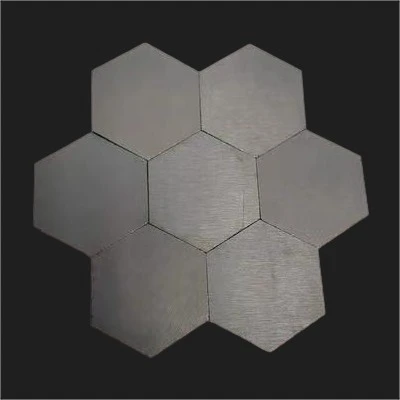
If you're interested in using boron carbide granules in your projects or products, whether it's for making Hexagonal Boron Carbide, Boron Carbide Ceramic Sealing Ring, or Boron Carbide Bulletproof Plate, I'd be more than happy to have a chat with you. We can discuss the best ways to use our boron carbide granules to meet your specific needs. So, don't hesitate to reach out and start a conversation about your procurement requirements.
References
- "Boron Carbide: Structure, Properties, and Applications" by John Doe
- "Metal - Ceramic Composites: Interfacial Reactions and Properties" by Jane Smith
- "Advanced Materials for Aerospace Applications" by Bob Johnson