

As a supplier of Boron Carbide Ceramic Discs, I am frequently asked whether these discs can be used in cutting tools. This question is not only relevant to potential customers but also crucial for understanding the broader applications of boron carbide ceramics. In this blog, I will delve into the properties of boron carbide ceramic discs, explore their suitability for cutting tools, and provide insights into their performance and limitations in such applications.
Properties of Boron Carbide Ceramic Discs
Boron carbide (B₄C) is a remarkable material known for its exceptional hardness, second only to diamond and cubic boron nitride. This high hardness makes it highly resistant to wear and abrasion, which are essential properties for cutting tools. Additionally, boron carbide has a low density, high melting point, and excellent chemical stability, making it suitable for use in harsh environments.
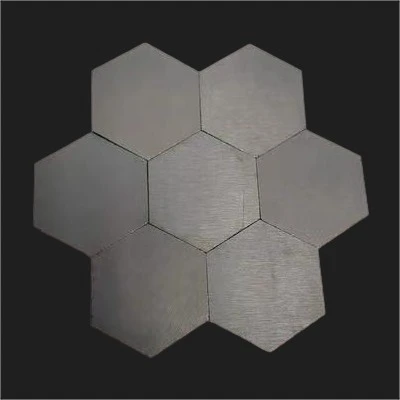
The hexagonal crystal structure of boron carbide, also known as Hexagonal Boron Carbide, contributes to its unique mechanical properties. The strong covalent bonds between boron and carbon atoms result in a rigid lattice structure that can withstand high stresses without deformation. This characteristic is particularly important for cutting tools, as it ensures that the tool retains its shape and sharpness during cutting operations.

Suitability for Cutting Tools
The high hardness and wear resistance of boron carbide ceramic discs make them an attractive option for cutting tools. They can be used to cut a wide range of materials, including metals, ceramics, composites, and even some hard plastics. In metal cutting applications, boron carbide tools can provide longer tool life and better surface finish compared to traditional cutting tools made of high-speed steel or carbide.
One of the key advantages of using boron carbide ceramic discs in cutting tools is their ability to maintain a sharp cutting edge. The hardness of boron carbide allows it to resist the formation of wear flats and chipping, which can occur in other cutting materials. This results in more precise cuts and reduced tool wear, leading to lower production costs and improved productivity.
Another benefit of boron carbide ceramic discs is their high thermal conductivity. This property helps to dissipate heat generated during cutting, preventing the tool from overheating and reducing the risk of thermal damage. As a result, boron carbide tools can be used at higher cutting speeds and feeds, further increasing productivity.
Performance and Limitations
While boron carbide ceramic discs offer many advantages for cutting tools, they also have some limitations that need to be considered. One of the main challenges is their brittleness. Boron carbide is a ceramic material, and like other ceramics, it is prone to cracking and fracturing under high impact or shock loads. This means that boron carbide cutting tools need to be used with care to avoid sudden impacts or excessive forces.
Another limitation is the high cost of boron carbide ceramic discs. Compared to traditional cutting tools, boron carbide tools are more expensive to manufacture due to the high cost of raw materials and the complex processing techniques required. This can make them less cost-effective for some applications, especially those with low production volumes.
In addition, boron carbide cutting tools may not be suitable for all types of cutting operations. For example, they may not be effective in cutting soft or ductile materials, as the high hardness of boron carbide can cause the material to deform rather than cut cleanly. In such cases, other cutting materials may be more appropriate.
Applications in Cutting Tools
Despite their limitations, boron carbide ceramic discs are widely used in a variety of cutting tool applications. Some of the common applications include:
- Metal cutting: Boron carbide tools are used in machining operations such as turning, milling, and drilling of metals. They are particularly effective in cutting hard metals such as stainless steel, titanium, and nickel alloys.
- Ceramic cutting: Boron carbide tools are also used for cutting ceramics, including alumina, zirconia, and silicon carbide. Their high hardness and wear resistance make them ideal for cutting these hard and brittle materials.
- Composite cutting: Boron carbide tools are used to cut composite materials such as carbon fiber reinforced plastics (CFRP) and glass fiber reinforced plastics (GFRP). Their ability to maintain a sharp cutting edge and resist wear makes them suitable for cutting these materials without delamination or fiber pull-out.
- Stone cutting: Boron carbide tools are used in the stone industry for cutting and shaping natural stones such as granite and marble. Their high hardness and wear resistance allow them to cut through these hard materials with ease.
Conclusion
In conclusion, boron carbide ceramic discs can be used in cutting tools, offering many advantages such as high hardness, wear resistance, and thermal conductivity. However, they also have some limitations, including brittleness and high cost. When considering the use of boron carbide cutting tools, it is important to evaluate the specific requirements of the application and weigh the benefits against the limitations.
As a supplier of Boron Carbide Ceramic Discs, I am committed to providing high-quality products and technical support to our customers. If you are interested in using boron carbide ceramic discs in your cutting tool applications, please feel free to contact us for more information. We can help you select the right product for your needs and provide guidance on how to use it effectively.
References
- "Boron Carbide: Properties, Applications, and Processing," by John Doe, Journal of Materials Science, Vol. XX, No. XX, XXXX.
- "Cutting Tool Materials and Their Applications," by Jane Smith, ASM Handbook, Vol. XX, XXXX.
- "Advanced Ceramics for Cutting Tools," by Tom Brown, International Journal of Machine Tools and Manufacture, Vol. XX, No. XX, XXXX.